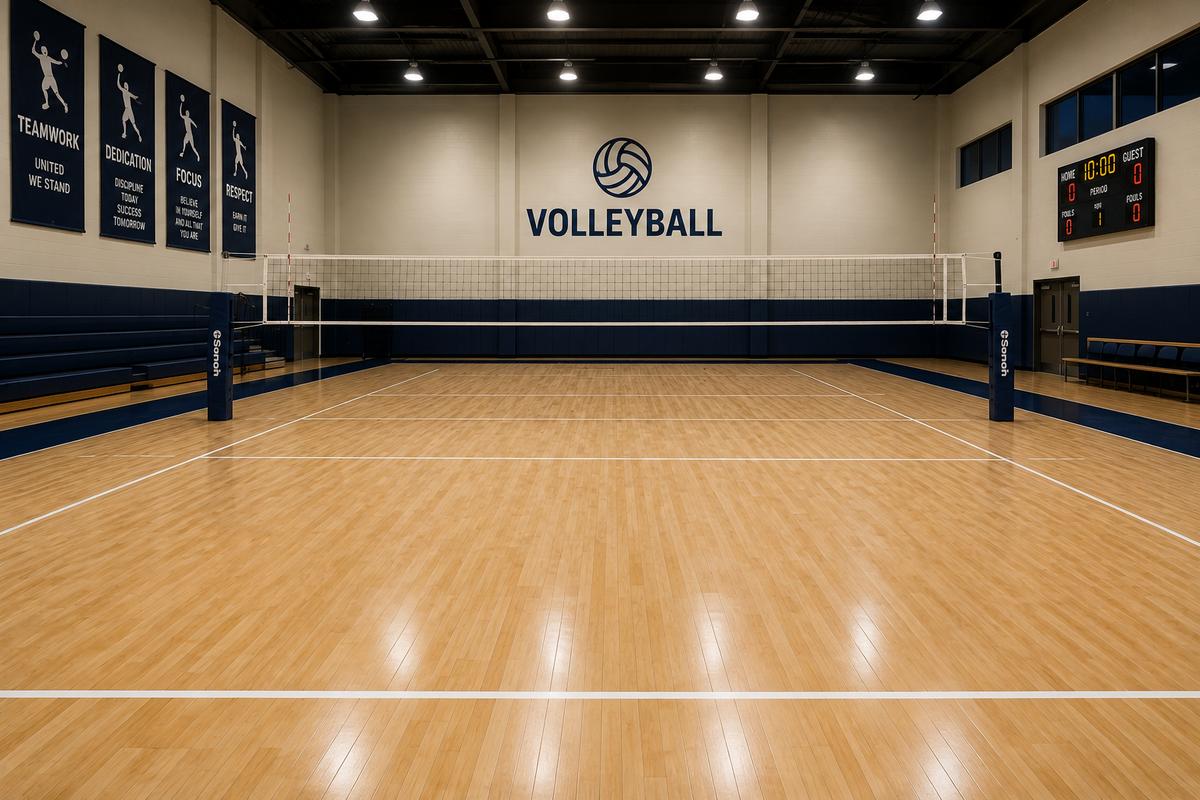
How to Choose the Right Wooden Flooring for Your Badminton Court
Share
🏸 Badminton is one of the fastest indoor racquet sports in the world, and the surface players move on directly affects their performance, safety, and the longevity of the facility. Unlike basketball or volleyball courts, badminton demands quick lateral movements, sudden lunges, and repeated jumps — all concentrated on a relatively small playing area. This makes the choice of flooring far more critical than most facility owners realize.
🥇 Why Wood Is the Preferred Choice for Badminton
Wooden flooring has remained the gold standard for competitive badminton for good reason. It offers the right balance of shock absorption, ball bounce consistency, and underfoot comfort. Synthetic alternatives have improved, but they still can't fully replicate the natural give and rebound of a properly engineered wood floor system, which is why international federations continue to favor wood for top-tier venues.
⚙️ Shock Absorption: Point Elastic vs. Area Elastic
This is the single most important technical factor. Badminton involves repeated jumping and landing, often on one foot, which puts significant stress on a player's knees and ankles.
| System | How It Works | Best For |
|---|---|---|
| Area elastic | Flexes over a wide area under force | Aerobics — not ideal for badminton (can cause a "trampoline effect") |
| Point elastic | Absorbs shock locally at point of impact | Badminton — stable footing for quick direction changes |
| Combination | Point elastic with controlled area elastic properties | Multi-purpose halls |
A good system should meet shock absorption standards specified under norms like DIN 18032-2 or equivalent, which most reputable sports flooring manufacturers test against.
🌳 Wood Species and Grade
The type of timber used affects durability, appearance, and how the floor responds to load over time.
- Maple — widely used internationally for its hardness, light color (which helps with visibility of shuttlecocks), and consistent grain
- Oak — durable and attractive, though slightly heavier and costlier
- Pine and other engineered options — more budget-friendly, often used as a base layer rather than the top playing surface
The grade of the wood matters as much as the species. Look for flooring graded specifically for sports use, with minimal knots, consistent moisture content (ideally 8–12%), and proper kiln drying to prevent warping.
🧱 Sub-Floor Construction
The visible wooden surface is only the top layer of a much more important system underneath. A typical sports floor build-up includes:
- A moisture barrier
- Resilient pads or rubber elastomers for shock absorption
- Plywood or batten support layers
- The final hardwood or engineered wood playing surface
This multi-layer construction is what actually determines how the floor performs, not just the top wood layer. A premium hardwood surface on a poor sub-floor will fail prematurely — cupping, creaking, or losing its bounce within a couple of years.
✨ Surface Finish and Friction Level
Badminton players need a surface that allows controlled sliding — too much grip causes joint stress and falls when players try to pivot; too little grip causes slips. The standard recommendation is a friction coefficient between 0.4 and 0.6, achieved through a properly applied PU (polyurethane) or acrylic-based sports finish, not a regular furniture-grade varnish. The finish should also be matte or low-gloss to reduce glare under court lighting.
🎨 Court Markings and Color
Wooden courts are typically finished in shades of light maple, grey, or green, with white or yellow court lines for badminton, painted directly onto the surface and sealed under the final coats of finish for durability. Multi-sport halls sometimes need multiple line sets in different colors, which should be planned at the design stage.
🧼 Maintenance Requirements
- Daily dry mopping / dust mop cleaning
- Periodic damp mopping with pH-neutral cleaners (never harsh chemicals)
- Re-coating of the finish every few years depending on usage intensity
- Climate control — wooden floors are sensitive to humidity swings, so the hall's HVAC and ventilation matter as much as the floor itself
💰 Budget vs. Long-Term Value
It's tempting to compare flooring options purely on upfront cost per square foot, but this is where many facility owners go wrong. A cheaper system with inadequate shock absorption or poor sub-flooring often needs partial or full replacement within 5–7 years, while a properly engineered system can last 15–20+ years with routine maintenance. Always ask for the expected lifecycle, not just the installation cost.
🔧 Installer Experience and After-Sales Support
Even the best flooring material can underperform if installed incorrectly — uneven sub-floors, improper acclimatization of the wood, or poor sealing at the joints are common issues with inexperienced installers. Ask any potential supplier for references, completed project photos, and warranty terms that cover both material and installation defects.
✅ Quick Checklist Before You Finalize
- Does the system meet recognized shock absorption and ball-bounce standards?
- Is the wood properly graded and kiln-dried for sports use?
- Has the sub-floor construction been explained to you in detail?
- Does the finish meet the recommended friction range for badminton?
- What is the warranty, and does it cover both materials and workmanship?
- What maintenance routine is required, and is it realistic for your facility?
- Has the installer completed similar projects you can verify?
❓ Frequently Asked Questions
🔸 Is wooden flooring better than synthetic/PU flooring for badminton?
Both have their place. Wood offers superior natural bounce and shock absorption, and is the standard for competitive venues. Synthetic flooring is often more budget-friendly and easier to maintain, suiting recreational or multi-purpose facilities.
🔸 How long does a wooden badminton court floor last?
With proper installation and maintenance, a quality wooden sports floor can last 15–20 years or more, depending on sub-floor system, wood quality, finish, usage, and humidity control.
🔸 What is the ideal thickness for badminton court wooden flooring?
There's no single number — it depends on system design. The top wear layer is typically a few millimeters of hardwood over an engineered sub-floor ranging 30–75mm total, based on your hall's structure.
🔸 Can wooden flooring be installed over an existing concrete floor?
Yes — this is the most common scenario, using moisture barriers, support battens or panels, and resilient shock-absorbing layers before the final wood surface.
🔸 How do I maintain a wooden badminton court floor?
Daily dust mopping, periodic damp mopping with pH-neutral cleaners, avoiding water pooling, and maintaining stable indoor humidity. The finish coat typically needs reapplication every few years.
🔸 Does humidity really affect wooden courts that much?
Yes, significantly. Wood expands and contracts with moisture. Without proper acclimatization and consistent climate control, you can see gapping, cupping, or buckling.
🔸 What's the difference between point elastic and area elastic flooring?
Point elastic cushions impact right at the contact point without affecting the surrounding surface, giving stable footing. Area elastic flexes over a wider area — for badminton, point elastic or combination systems are generally recommended.
🔸 Can the same wooden court be used for other sports too?
Yes — many halls are designed as multi-purpose spaces for badminton, basketball, and volleyball. This requires planning for multiple court markings and a shock absorption system suited to the full range of activities.
🔸 How much does wooden badminton flooring cost?
Costs vary based on wood species, sub-floor system, hall size, and finish quality. It's worth evaluating total cost over the floor's lifespan, including maintenance and future re-coating, rather than just per-square-foot price.
🔸 How do I know if a flooring supplier is genuinely experienced with sports courts?
Ask for a portfolio of completed sports flooring projects, references you can contact, testing standards their systems meet, and warranty terms covering both materials and installation.
Planning a badminton court installation?
Talk to us about wooden sports flooring engineered for Indian conditions.
💬 Chat with us on WhatsApp